
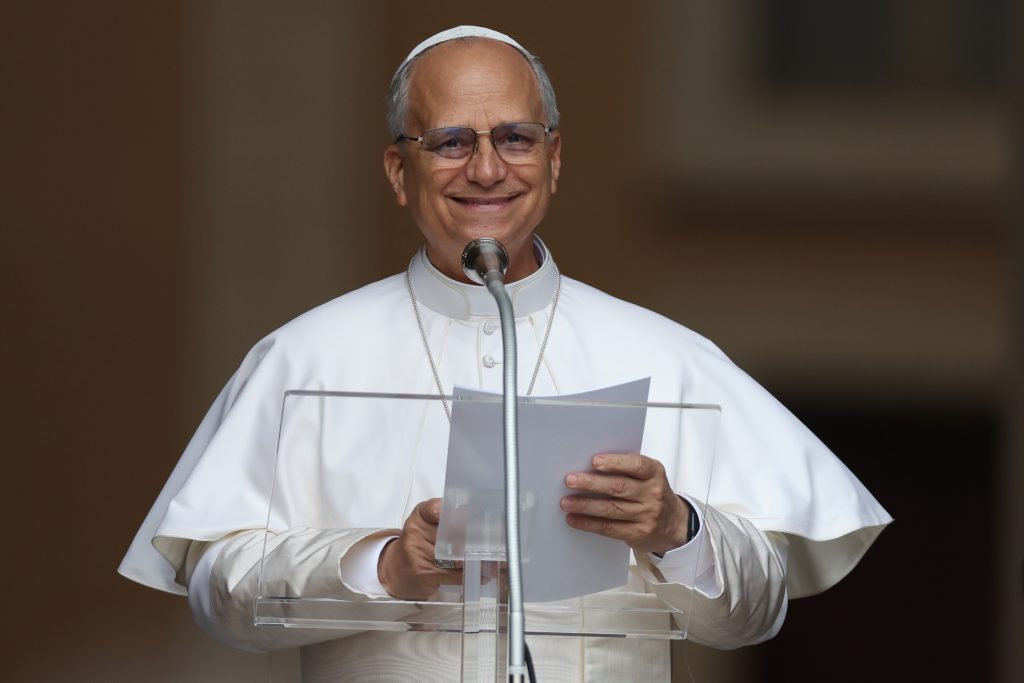
Pope Leo XIV’s encyclical ‘Magnifica humanitas’, focused on artificial intelligence (AI), has caused rivers of ink to flow and churned up mixed reactions around the world. Not only as a basic text because of its scope for millions of people – according to a 2021 Eurobarometer, 45.3% of European citizens identified themselves as Catholics – but also because of its approach, solidity, clarity and timeliness.
The European Association for Digital Transition (EADT) has been promoting a strategic dialog on the effects and implications of technological progress in the economy, on work, and in society, and as such we believe that the humanistic and social content of the papal message not only concerns Catholics as a moral guide, but also poses questions for all of us who think action must be taken to prevent the unwanted effects from AI development.
As a non-denominational civil society, it is easy to identify with most of the ethical, social and political messages defended in the encyclical. We firmly believe in the value of technology and AI to help humanity advance: this has been the case throughout history. Nevertheless, the current phase of technological expansion more closely resembles a period of uncritical worship of the new golden calf symbolized by the rise of AI.
As an organisation that has promoted a State Pact to protect minors in the digital environment, signed by more than 240 entities and institutions, we welcome the reference to the perverse effects of AI on minors: how it can contribute to isolating them from their natural surroundings, putting pressure on their social and individual development and, ultimately, negatively impacting their family life.
But there is much more to the encyclical. Based on human dignity, ‘Magnifica humanitas’ is rich and dense in ideas and content. It spreads the church’s social doctrine but also incorporates essential issues related to fundamental rights, technological power, institutional responsibility, surveillance, ethical governance and the risks of an algorithmic society. I would like to spend a moment on only two specific aspects.
The breach of inequality
First, the idea of the loss of control – economically, socially, politically, and as citizens – that goes along with the current way AI is spreading, especially if the power of dissemination is concentrated in only a few technological corporations, clearly established in the US and China.
The encyclical warns of something obvious: the consequences of this accelerated and competitive development can already be seen in the growing gap between those who truly benefit from these advances and those who are threatened with remaining on the outside, the excluded, increasing the already harmful inequality on the planet.
We fully share the idea contained in the papal message of strengthening institutions, understood not only from a regulatory and governmental approach but also including other civic and social creations that form dense relationships of cooperation and solidarity. That is, the essential institutions such as education, digital health, wellness care, public services and, in general, the entire institutional framework that our societies have created to protect their cohesive links and guide their future.
This institutional activation must be done as soon as possible, given the vertigo caused by the gap between technological speed and the slow pace of institutional responses. It has already been shown with historical and economic evidence that the preferred excuse by industry and most governments to not put a stop to this blind and disoriented spread of technology – namely, to not miss the innovation train – is a false and, above all, self-interested dichotomy.
Data is a common good
It is also easy to agree with the idea that under the guise of technological progress lies a neocolonial digital spirit, embodied in a return to the worst of the extractive industries in regard to companies and personal data. The digital colony, like an imitation of past times, is here and is happening now; Europe is, today, a colony of the big technological corporations that use it, grosso modo, for the same ends as before: free supply of raw materials (our data); placement of digital services and products (consumption); and tax exploitation (low or non-existent tax rates and income repatriation). Faced with this crude and lowly reality, which the aspirational project of European digital sovereignty comes up against, the Pope bravely points out that the data extraction which technology companies are not paying for is a common good.
With regard to this position, the official reaction of the European Commission is ingenuous, stating that the EU has already provided itself with an effective regulatory framework, that is, a sort of “we have resolved this”. It is precisely the opposite: The EU’s approach is to view AI as a complex technology that produces results that can be negative and, as such, creates risks that should be lessened or eliminated. Presenting AI as a commercial product or service encapsulated in a digital regulatory framework – respectful of human rights – and Europeans as mere consumers, they have robbed us of the in-depth debate on how and why we want AI.
Downstream responsability
Secondly, the EADT has called for specific responsibilities to be clearly defined and delimited when the use of AI causes damage or harm to individuals or social groups.
Beyond the criminal or civil liability of executives, managers or a Board of Directors, we propose exploring two channels of responsibility downstream: On the one hand, there should be the possibility of identifying and holding accountable the necessary enablers, the programmers who design high-risk patterns potentially capable of harming people, or those who should be controlling them.
On the other hand, responsibility also resides at the individual and collective level. It is not just about demanding our digital rights, but also about being aware that we have obligations in this new area. It’s time to complain less and act more.
In short, it is comforting to read such a relevant text for the Catholic world with which, to a large extent, we identify. As actors in civil society and as individuals, we recognise the value of the doctrine provided by the Pope. On this path, we aspire as well to be part of this ‘magnificent humanity’.
Ricardo Rodríguez Contreras, president of the European Association for Digital Transition