The European Association for Digital Transition (EADT) is participating in DigComp CHILD, a project funded by the European Union within the CERV-2025-CHILD call for proposals, which will develop a curriculum of digital skills for adolescents aged 12 to 16 based on scientific evidence.
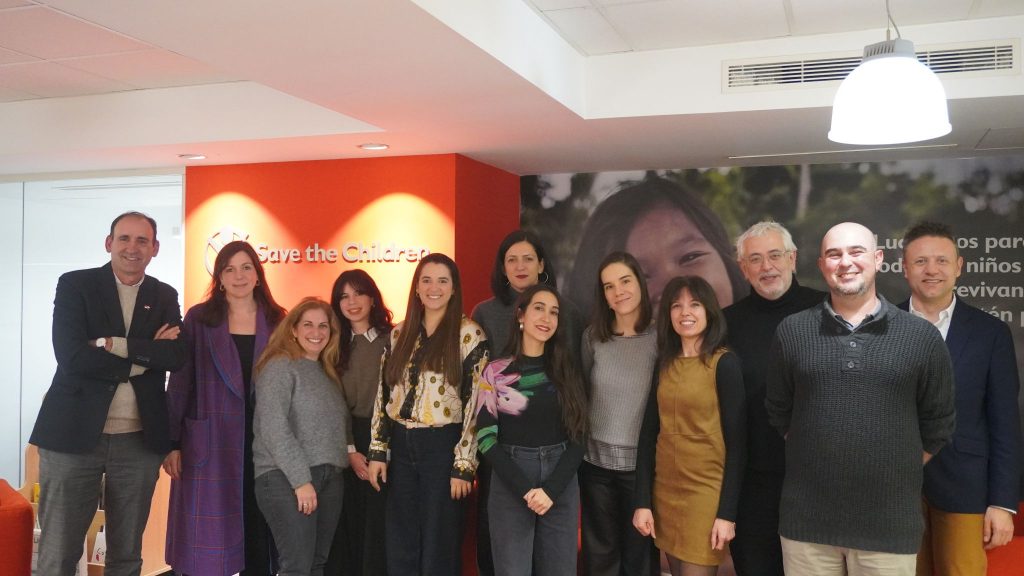
The consortium is also made up of Save The Children España, FAD Juventud, la Junta de Castilla y León y Save The Children Albania.
The project came about based on the idea that all adolescents have the right to participate in a safe, inclusive and informed way in the digital world. And as such, they are also entitled to be trained in the skills, knowledge and capacity for independent thinking needed to manage and thrive in a secure digital environment. And to do so in a safe, responsible way, while being fully aware of their rights.
To do this, DigComp CHILD will offer a scalable, evidence-based tool, tested in real-world classrooms, aimed at facilitating integration of a digital skills curriculum that is adaptable to formal education.
THE CHALLENGE
The idea that children and adolescents are “digital natives” has created a false sense of their skills.
But evidence shows that many of them do not know how to protect their data, do not recognize fake news, are not aware of their digital footprint, and they normalize excessive screen-time. Phenomena such as aesthetic pressure, disinformation, hate speech, or cyberbullying disproportionately affect girls, LGBTIQ+ youths and adolescents in vulnerable situations. This requires an evidence-based and gender-sensitive response from different fields, with the educational context being one of the main ones.
Aligned with the European DigCompEdu framework, DigComp CHILD has identified eight essential digital skills to work on with children and adolescents:
- Privacy Management
- Critical Thinking
- Digital Footprint
- Digital Empathy
- Cybersecurity Management
- Cyberbullying Management
- Screen-time Management
Nevertheless, teachers do not feel prepared to address these issues. Various reports show that many of them lack training in this regard and that their students do not look to them as references to strengthen their digital skills. This is why the challenge is to provide teachers with a common informational framework, clear tools, and resources applicable to the classroom. With these, they can teach adolescents about the eight key digital skills that can ensure their safe, healthy, critical, responsible and beneficial use of the Internet.
DIGCOMP CHILD’S INNOVATIVE SOLUTION
Our solution proposes developing a digital skills curriculum aimed at adolescents aged 12 to 16 in order to empower them in these eight key areas.
To ensure its effectiveness, the project will begin with a thorough diagnosis that will analyse good practices, regulatory gaps, and educational needs in Spain as well as Europe. This analysis, which will also include sessions with secondary school students in different areas, will help to base the curriculum design on real evidence and on the specific needs of students and teachers.
Based on this diagnosis, DigComp CHILD will develop a comprehensive and inclusive curriculum, co-designed with the participation of adolescents, teachers, experts and other key actors, ensuring that it responds to the diversity of educational contexts and social realities.
The project will also incorporate an essential scientific dimension: a rigorous evaluation of its impact in educational centres, guaranteeing high ethical and methodological standards to measure the real impact of the curriculum on students’ digital skills. The EADT will contribute our experience in the analysis and diagnosis of digital environments and the protection of children in them, contributing to more adolescents developing digital skills that will allow them to relate to technology in a safe, healthy, critical and responsible way. Over the next few months we will share more information about the project’s progress and activities.